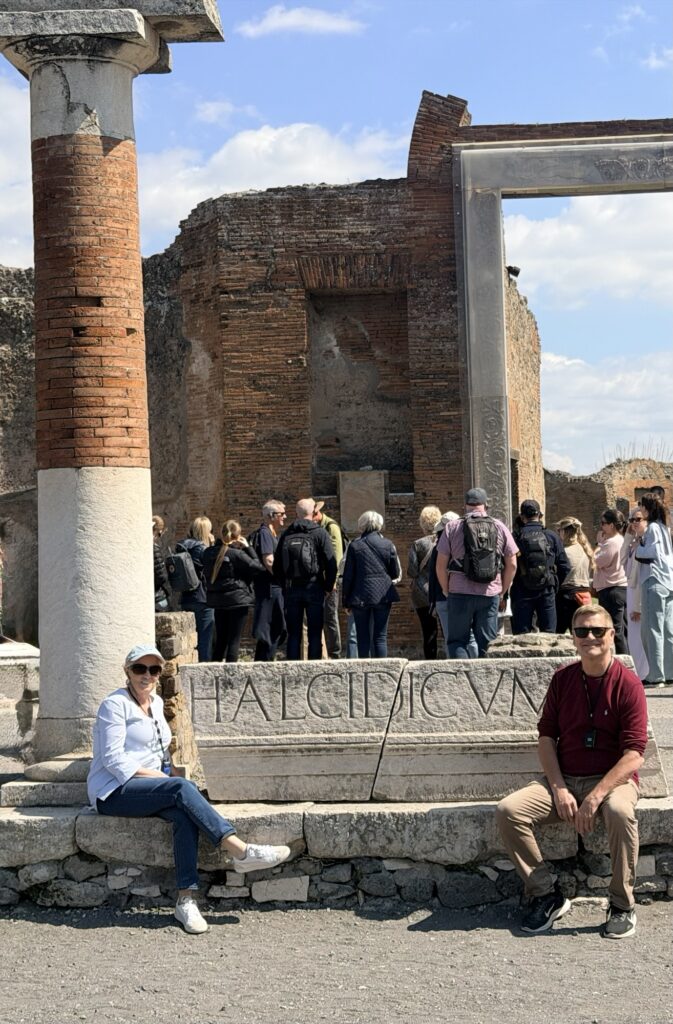
There are places you visit, and then there are places that stay with you. Pompeii is firmly in the second category.
I had seen the photos, read the history, heard people describe it as “impressive” or “somber.” Experiencing it after days at sea on the Windstar Star Legend gave it a depth I wasn’t expecting. None of that quite prepares you for what it feels like to walk through a city that was frozen in time nearly two thousand years ago, yet still feels eerily alive.
If you are planning a visit, here is what it is really like to experience Pompeii, along with what you should know before you go.
Arriving in Pompeii
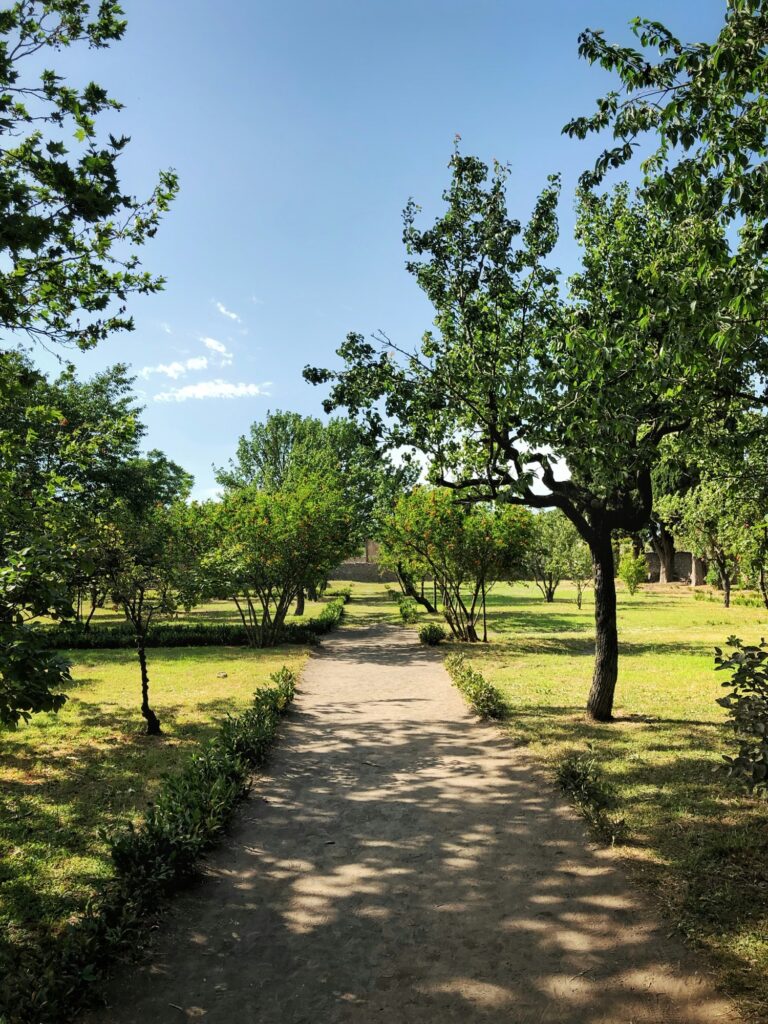
Pompeii sits just outside Naples, making it an easy day trip whether you are staying in Rome, Sorrento, or along the Amalfi Coast. The most common arrival point is the Pompei Scavi station, which drops you just steps from the entrance.
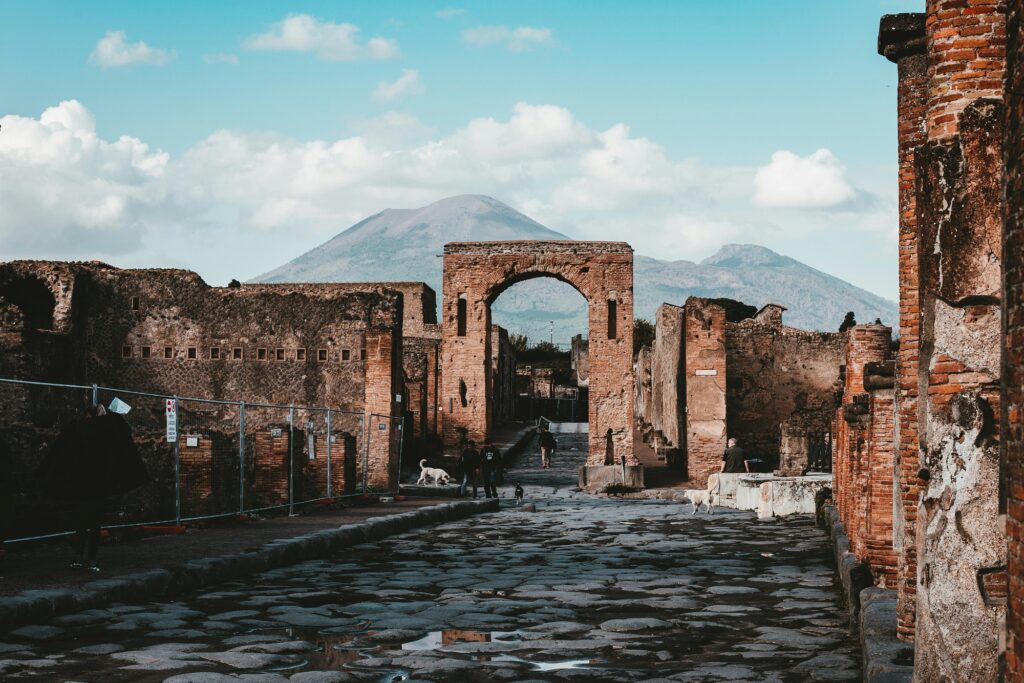
From the moment you step outside, you feel the shift. Modern life fades quickly. Mount Vesuvius rises in the background, quiet now, but impossible to ignore.
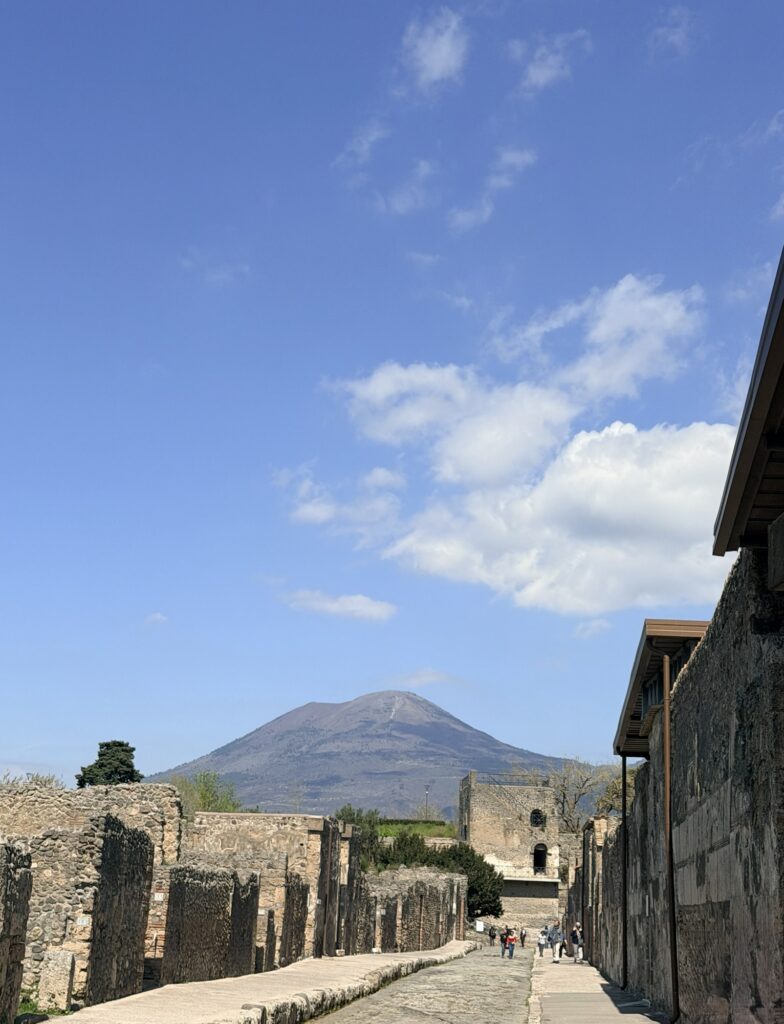
It sets the tone before you even walk through the gates.
First Impressions Inside the Ruins
The first thing that struck me was the scale.
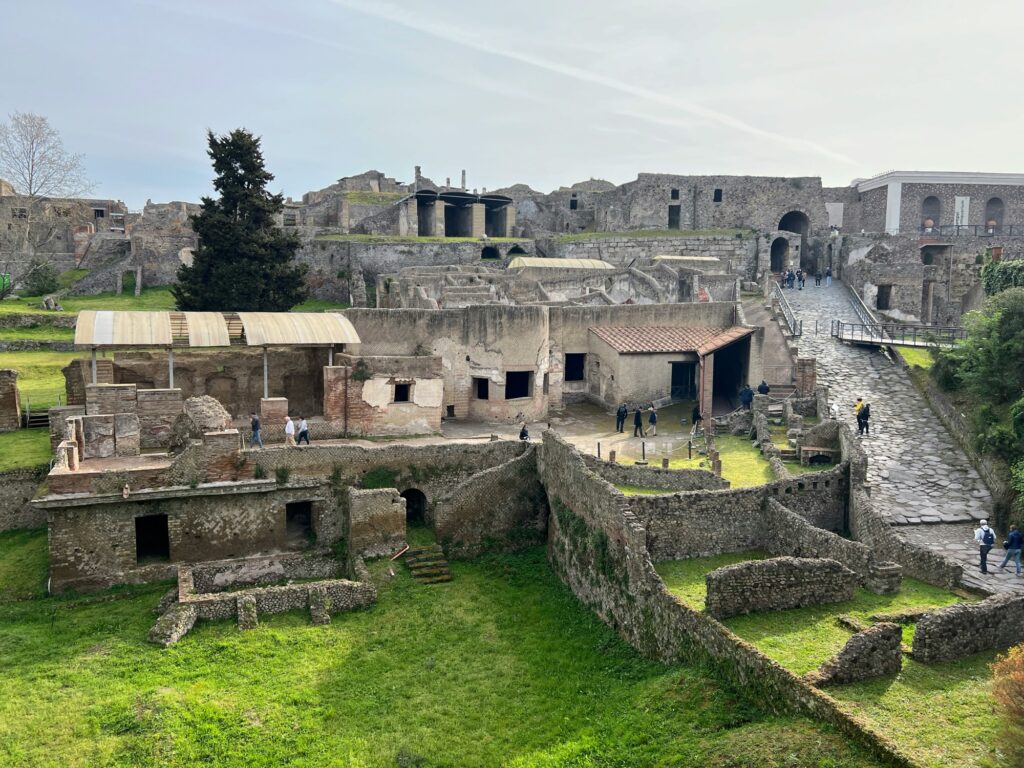
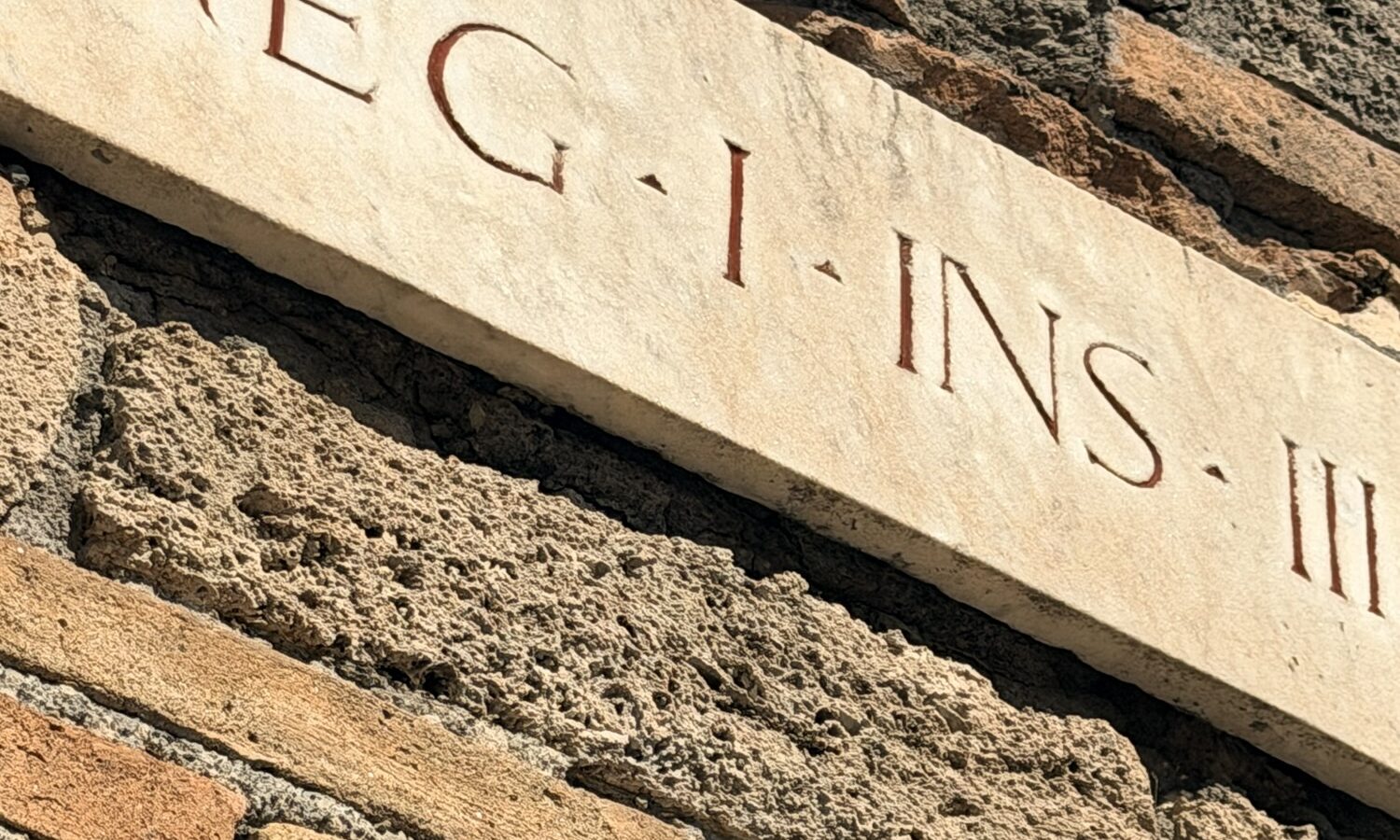
Pompeii is not a single site or a collection of ruins. It is an entire city. Streets, homes, shops, bathhouses, temples. You are not looking at history behind glass. You are walking directly through it.
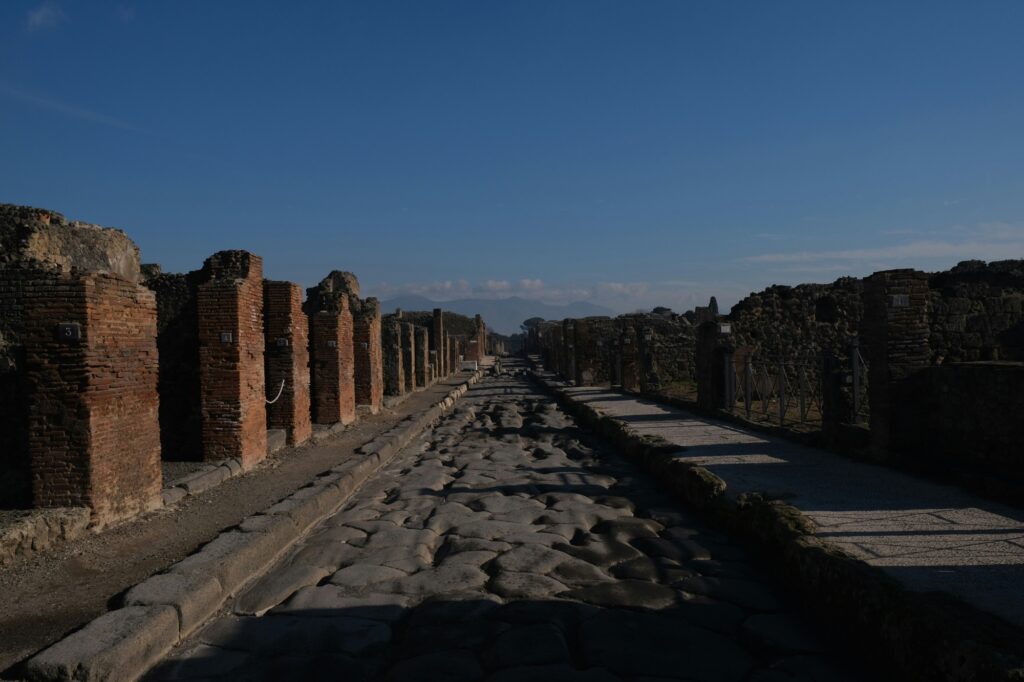
The stone streets are still grooved from ancient carts. Doorways still frame what were once homes filled with everyday life. You can almost hear it if you slow down enough.
It does not feel staged or curated. It feels real.
What Happened Here
In 79 AD, Mount Vesuvius erupted, burying Pompeii under ash and volcanic debris. What makes Pompeii so extraordinary is how quickly it was covered. That rapid burial preserved buildings, objects, and even human forms in a way that is almost unimaginable.
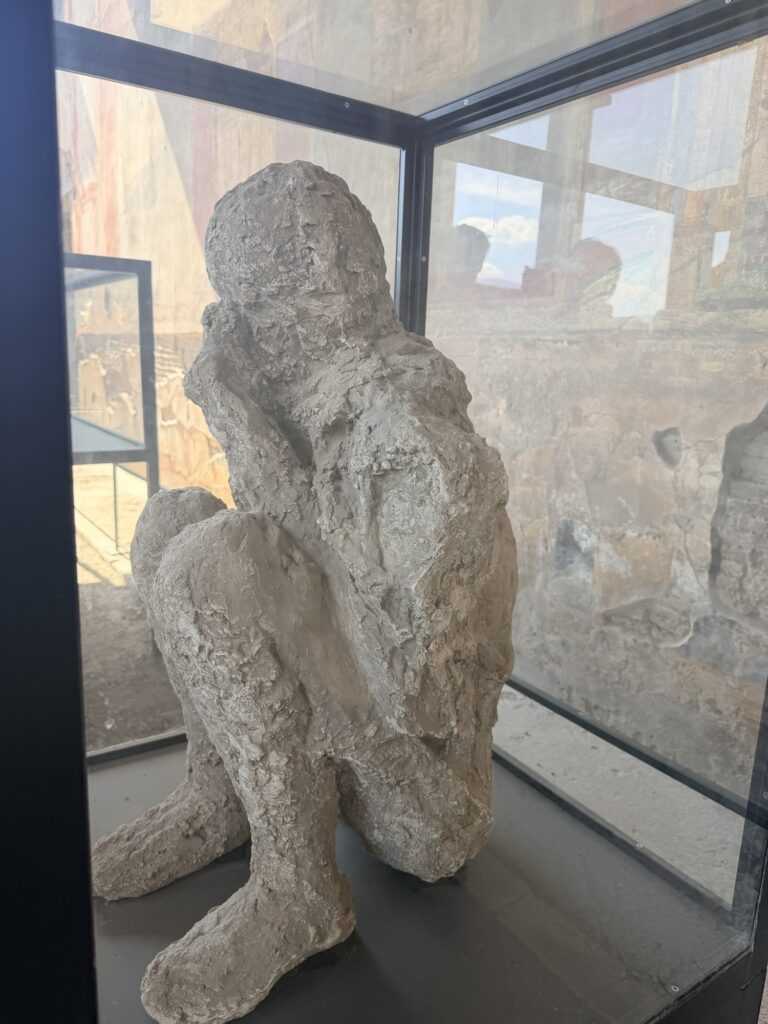
You will see plaster casts of people caught in their final moments. Some curled in on themselves. Some reaching out. It is powerful, and it stops you in your tracks.
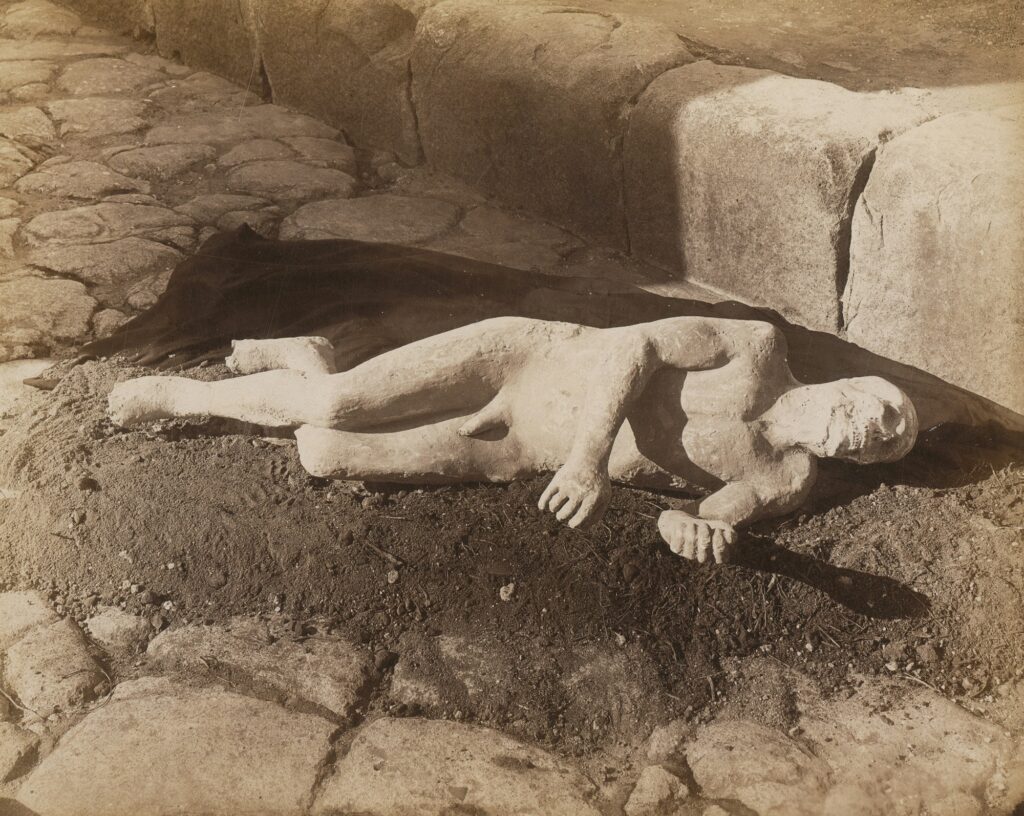
This is not just history. It is human.
Highlights You Should Not Miss
Pompeii is massive, and it is easy to feel overwhelmed. If you go in without a plan, you can wander for hours and still miss some of the most important areas. These are a few places that stood out the most to me.
The Forum
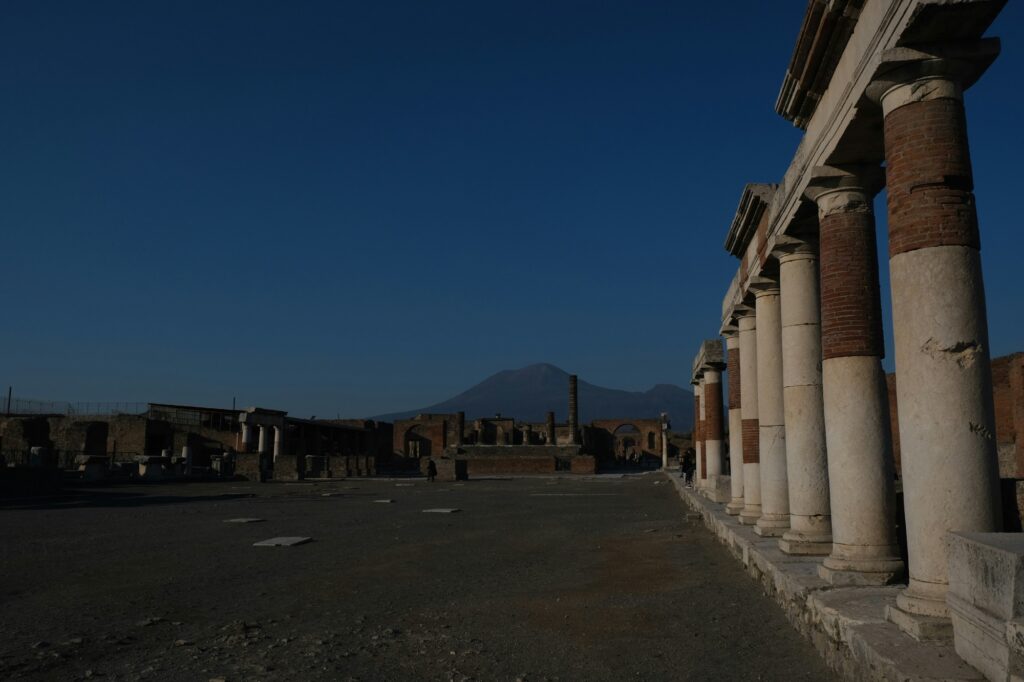
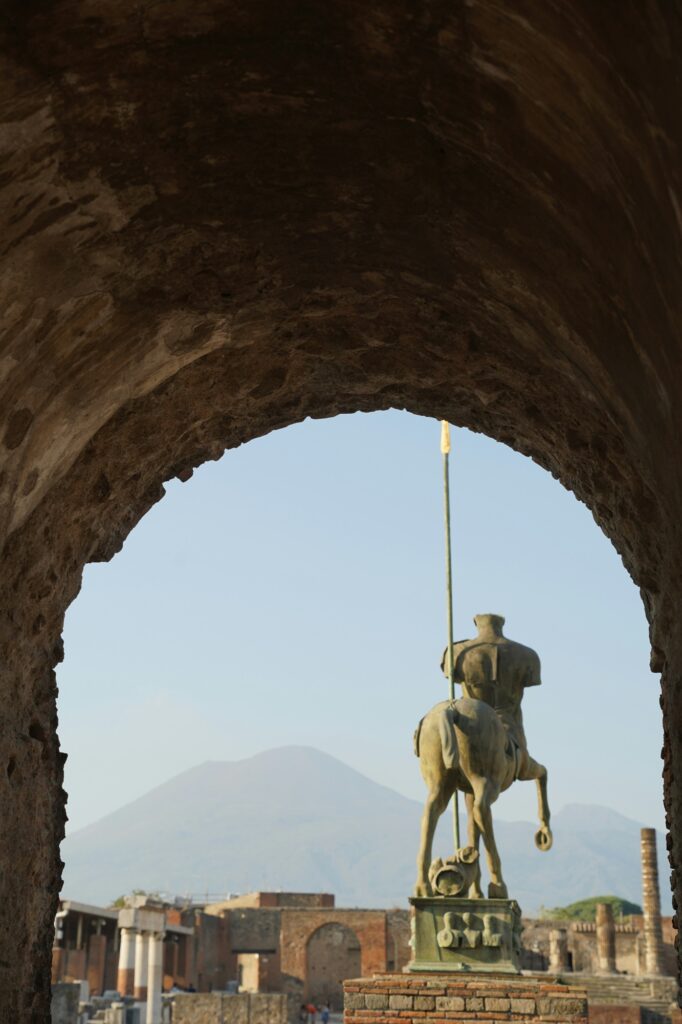
This was the heart of Pompeii. Standing here, you can see Mount Vesuvius perfectly framed in the distance. It is one of those views that feels almost too symbolic to be real.
Surrounded by columns and the remains of important buildings, it gives you a sense of how central this space once was.
The Amphitheater
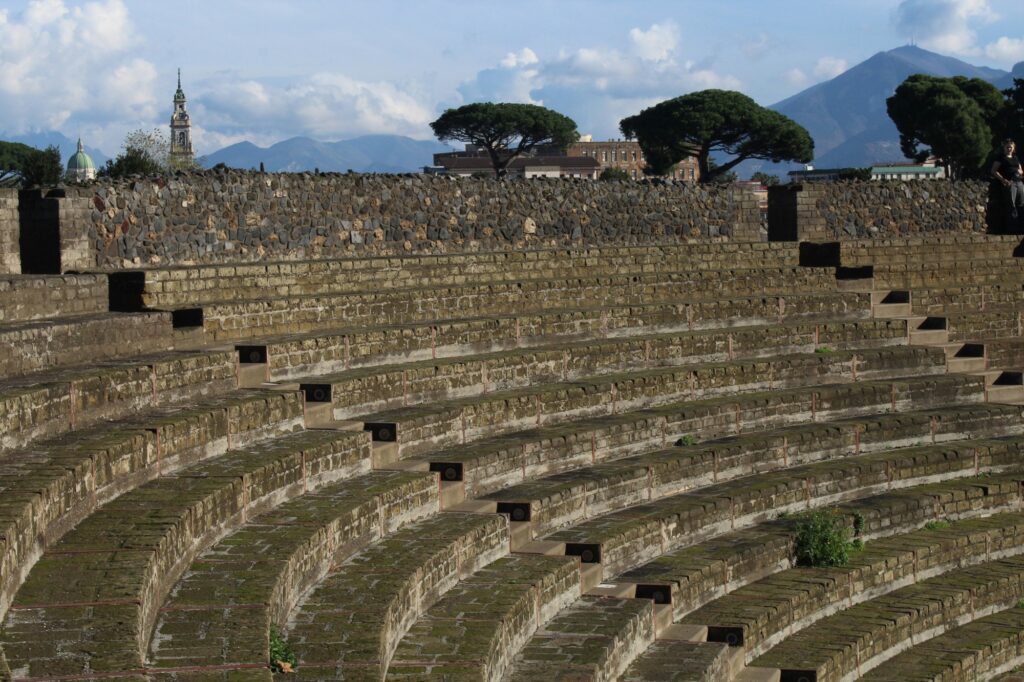
One of the oldest surviving Roman amphitheaters, and surprisingly well preserved. It is quieter here, especially if you arrive early or later in the day.
Sit for a moment. It is easy to imagine the energy this place once held.
The House of the Faun
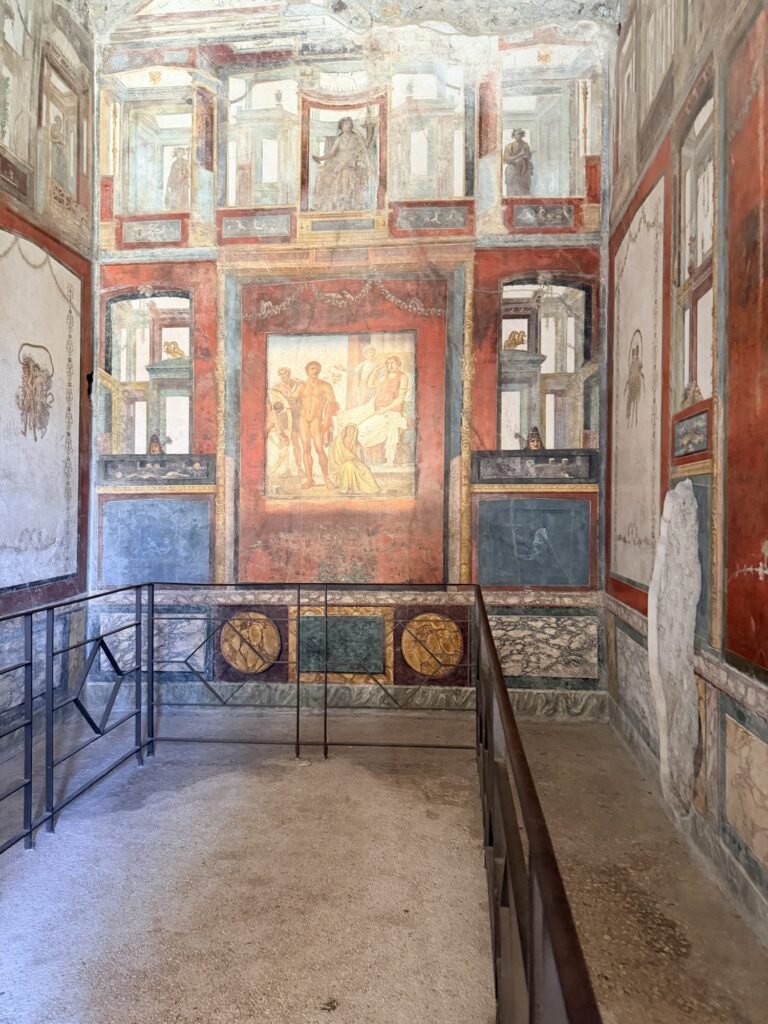
One of the largest and most impressive homes in Pompeii. It gives you a glimpse into how the wealthy lived, with open courtyards, detailed mosaics, and a sense of scale that feels almost modern.
The Baths
The public baths are fascinating because they show just how advanced Roman society was. Heating systems, changing rooms, social spaces. It was not just about bathing. It was about community.
The Streets Themselves
Honestly, some of my favorite moments came from simply walking.
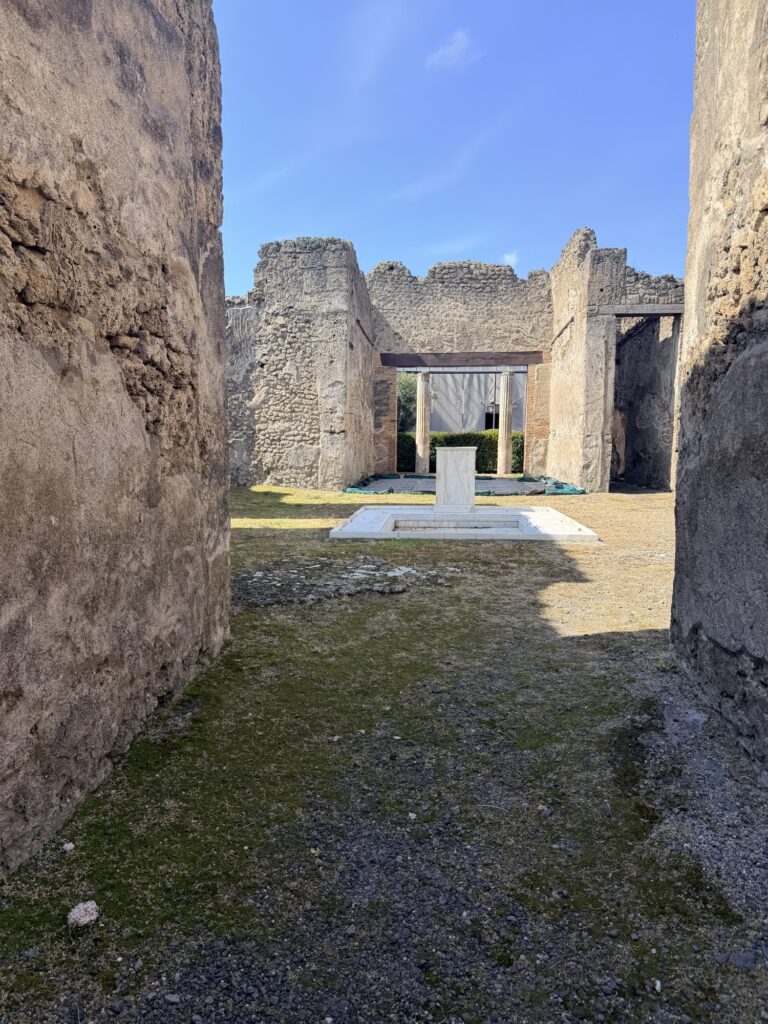
Turning down a quiet street. Looking into a small home. Finding a detail that most people walk right past. That is where Pompeii really comes to life.
What It Feels Like
There is a stillness here that is hard to describe.
Even with crowds, there are moments where everything goes quiet. Maybe it is the weight of what happened, or maybe it is just the way the space holds onto its past.
You are not just learning about history. You are stepping into it.
And it stays with you long after you leave.
Tips for Visiting Pompeii
Go Early or Late
Midday can be hot and crowded, especially in warmer months. If you can, arrive right when it opens or later in the afternoon. The light is better, the crowds are thinner, and the experience feels more personal.
Wear Comfortable Shoes
The ground is uneven, with ancient stones and cobblestones everywhere. This is not the place for anything delicate.
Bring Water
There is very little shade, and you will be walking more than you expect. Stay hydrated.
Consider a Guide or Audio Tour
Pompeii is fascinating on its own, but understanding what you are seeing adds a whole new layer. Even a simple audio guide can make a big difference. I HIGHLY RECOMMEND THIS!
Plan Your Route
You do not need to see everything. Focus on a few key areas and allow time to wander. That balance makes the experience feel less overwhelming.
How Much Time You Need
Most people spend between two and four hours here, but you could easily spend longer.
If you are short on time, focus on the Forum, a few homes, and one or two major sites like the amphitheater or baths. If you have the time, let yourself explore more slowly.
Pompeii rewards curiosity.
Pairing It With Nearby Destinations
Many travelers combine Pompeii with a visit to Mount Vesuvius or nearby Herculaneum.
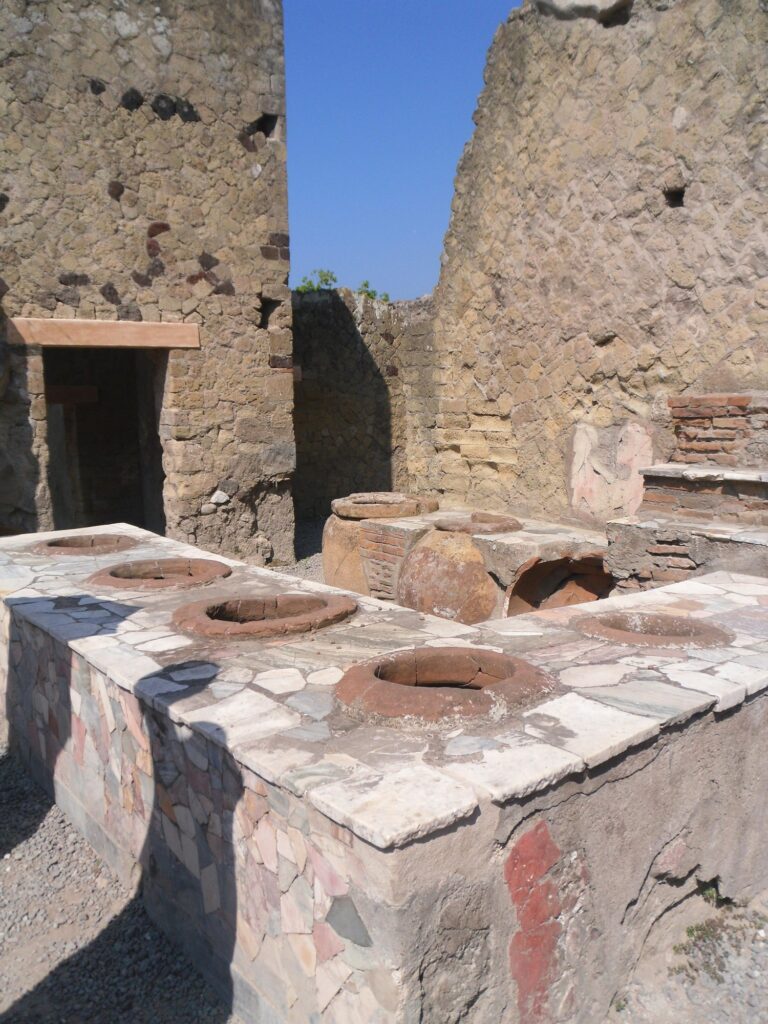
Herculaneum is smaller but even better preserved in some ways. If Pompeii feels expansive, Herculaneum feels more intimate.
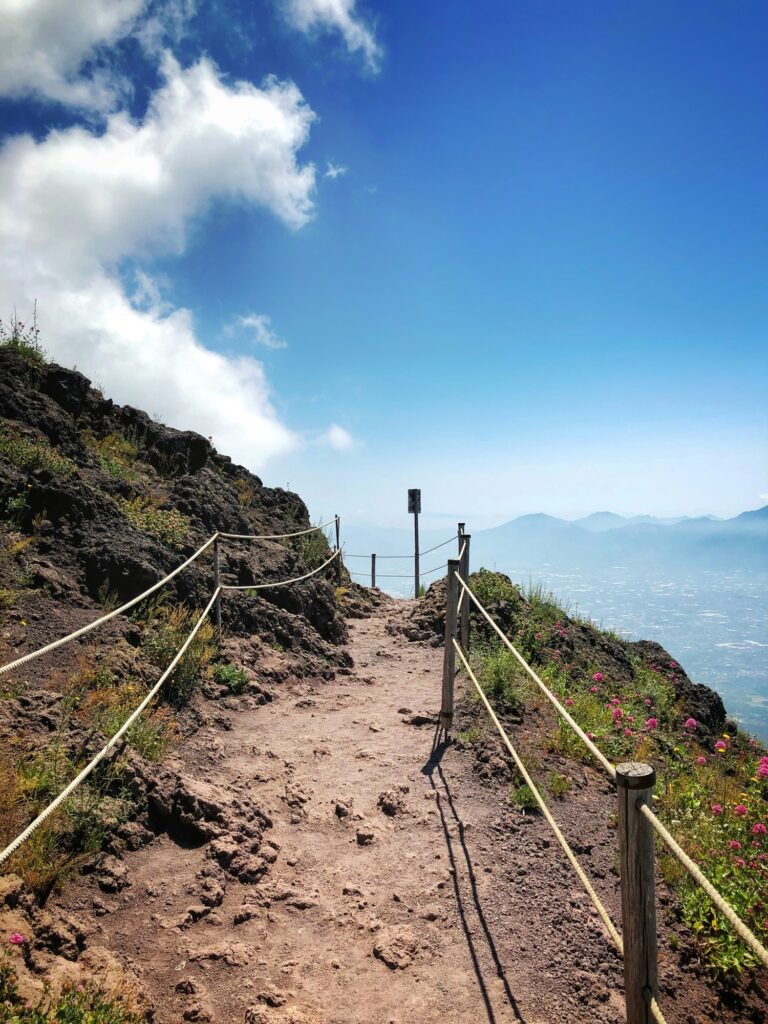
Mount Vesuvius offers a completely different perspective. Standing at the top and looking down toward Pompeii adds context that is hard to fully grasp otherwise.
Final Thoughts
Pompeii is not just another stop on an itinerary.
It is a place that shifts something in you. A reminder of how quickly life can change, and how much of it remains long after we are gone.
When you walk through its streets, you are not just observing history. You are stepping into the story of a real place, filled with real people, whose lives were interrupted in an instant.
And as we sailed on with Windstar, it wasn’t just another port behind us, but a place that lingered long after the shoreline disappeared.