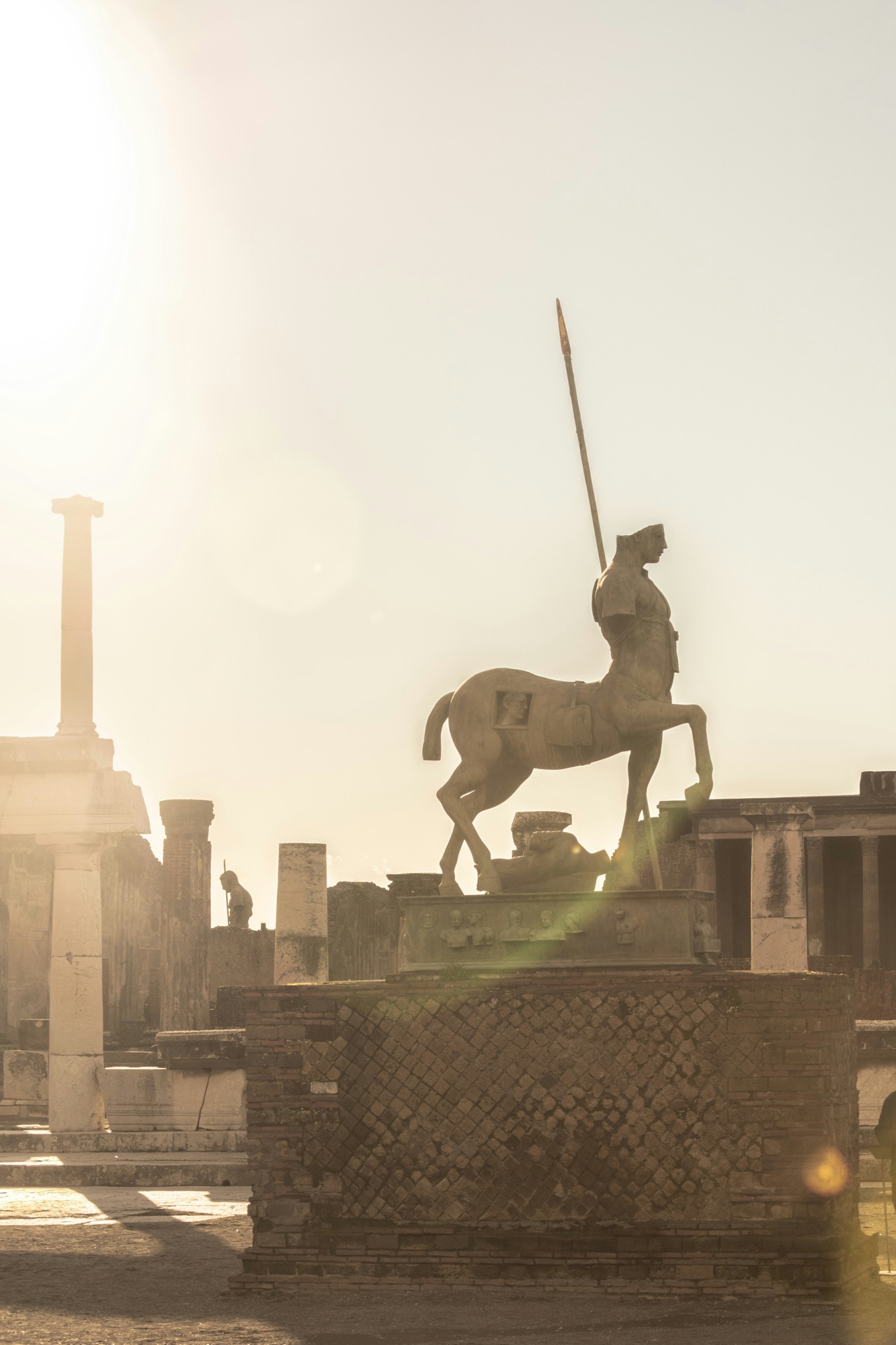

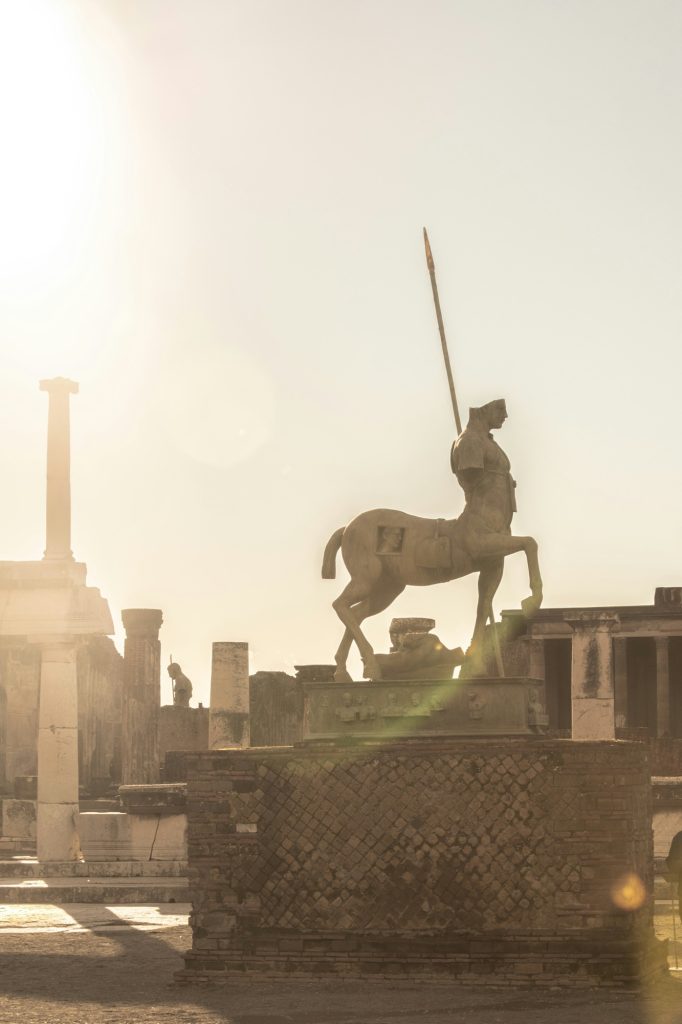
Before I visited Pompeii, I expected to see impressive ruins. I didn’t expect it to become one of the most memorable places I’ve been in Italy.
You can read about the eruption of Mount Vesuvius, but nothing compares to walking the same streets people walked nearly 2,000 years ago. You look inside their homes, stand where they bought bread, visit the baths where they gathered, and see a city that was suddenly frozen in time. It doesn’t feel like a collection of ruins. It feels like a place where life simply stopped, and that’s what makes Pompeii unlike anywhere else.
Many people visit Pompeii as a quick stop between Naples, Sorrento, or the Amalfi Coast. While you can see the highlights in a couple of hours, you’d be missing what makes this place so extraordinary. Pompeii deserves your time, and if there’s one place in Italy where I’d recommend hiring a guide or downloading an audio guide, this is it. The ruins are fascinating on their own, but the stories behind them are what truly bring the city to life.
A City Frozen in Time
On August 24, AD 79, life in Pompeii looked much like any other day. Merchants opened their shops. Bakers prepared fresh bread. Children played in the streets. Families gathered for meals.
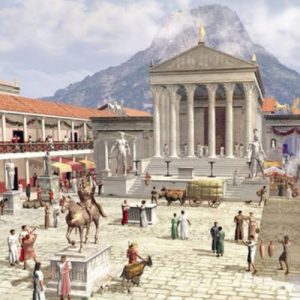
Then Mount Vesuvius erupted.
A series of massive explosions sent ash, rock, and volcanic gases high into the sky before deadly pyroclastic flows swept through the city. Within hours, Pompeii disappeared beneath layers of volcanic ash, preserving an extraordinary snapshot of Roman life.
Ironically, the same eruption that destroyed the city is also what protected it. Buildings, artwork, streets, household items, and even food remained buried for centuries until excavations began in the 1700s.
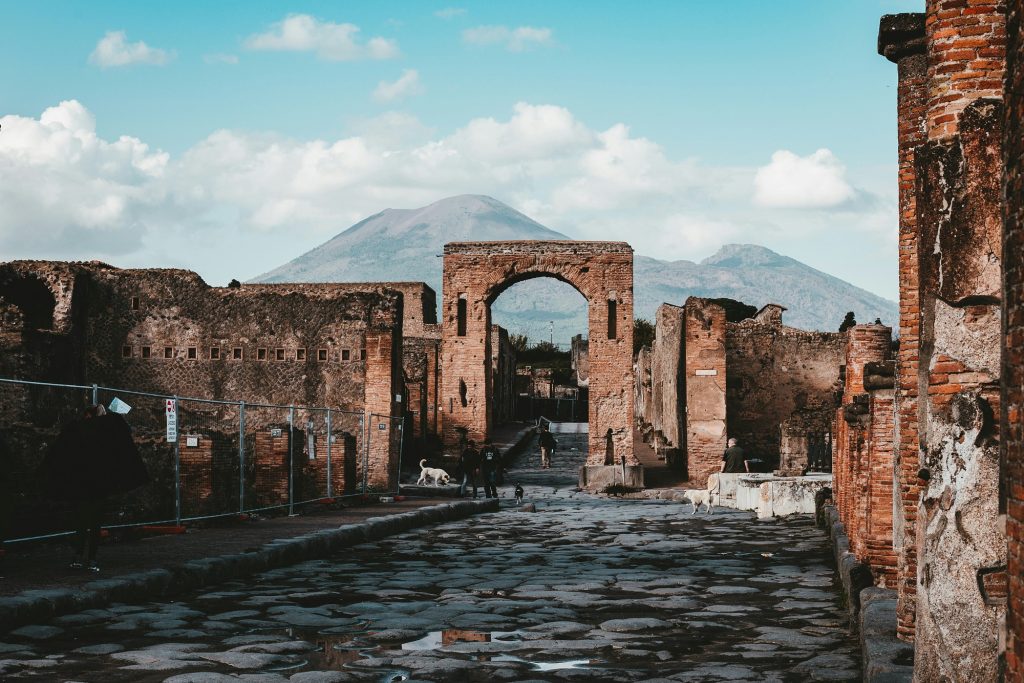
Today, Pompeii is one of the most important archaeological sites in the world, and archaeologists are still uncovering new discoveries. Every year reveals more about how the Romans lived, worked, worshipped, and spent their free time.
Why a Guide Makes Such a Difference
At first glance, Pompeii can look like rows of stone walls and empty rooms.
Without context, it’s easy to wonder what you’re actually looking at.
That’s where a guide completely changes the experience.
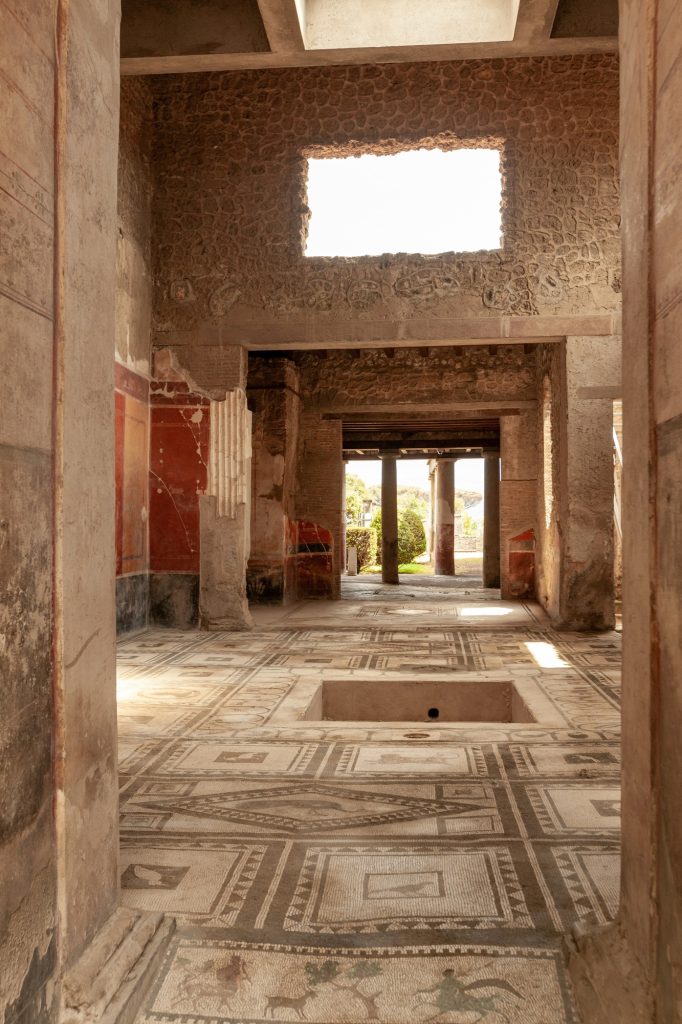
Instead of simply pointing out buildings, a knowledgeable guide helps you understand how the city functioned. They’ll explain why some homes were lavish while others were modest, how the Romans built running water into their cities, where people gathered to socialize, and what daily life looked like nearly two millennia ago.
One room suddenly becomes a wealthy merchant’s dining room.
A stone counter becomes the Roman version of fast food.
The grooves carved into the streets become evidence of centuries of wagon traffic.
Even the faded graffiti becomes fascinating once you realize it includes political advertisements, business promotions, jokes, and messages between neighbors.
Suddenly, Pompeii doesn’t feel ancient anymore.
It feels familiar.
Give Yourself More Time Than You Think
One mistake many visitors make is treating Pompeii as a quick stop.
The archaeological park covers more than 160 acres, making it one of the largest ancient cities you can visit anywhere in the world.
You could easily spend an entire day exploring, especially if you enjoy history or photography.
I’d recommend planning at least four to six hours here. That gives you enough time to explore beyond the busiest streets, wander into quieter neighborhoods, and appreciate details that many visitors miss.
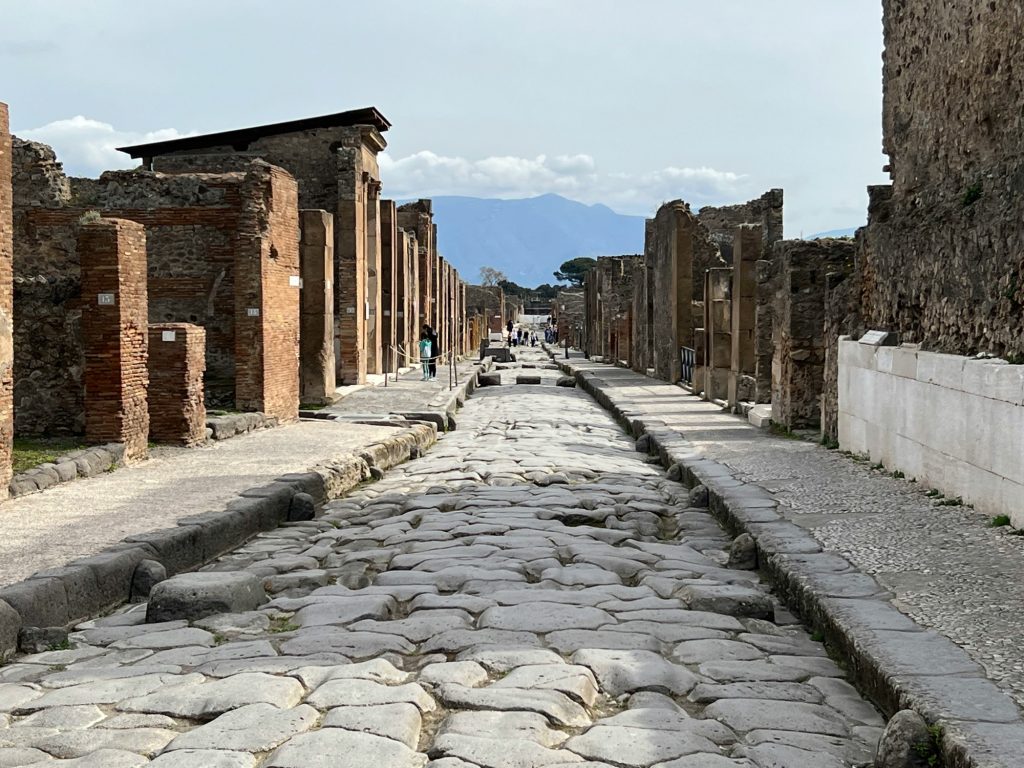
Comfortable walking shoes are essential. The original Roman streets are made of uneven volcanic stone, and you’ll spend much of the day walking on cobblestones.
Bring water, sunscreen, and a hat, especially if you’re visiting during summer. Shade is surprisingly limited throughout much of the site.
Places You Shouldn’t Miss
While every corner of Pompeii tells a story, a few places stand out.
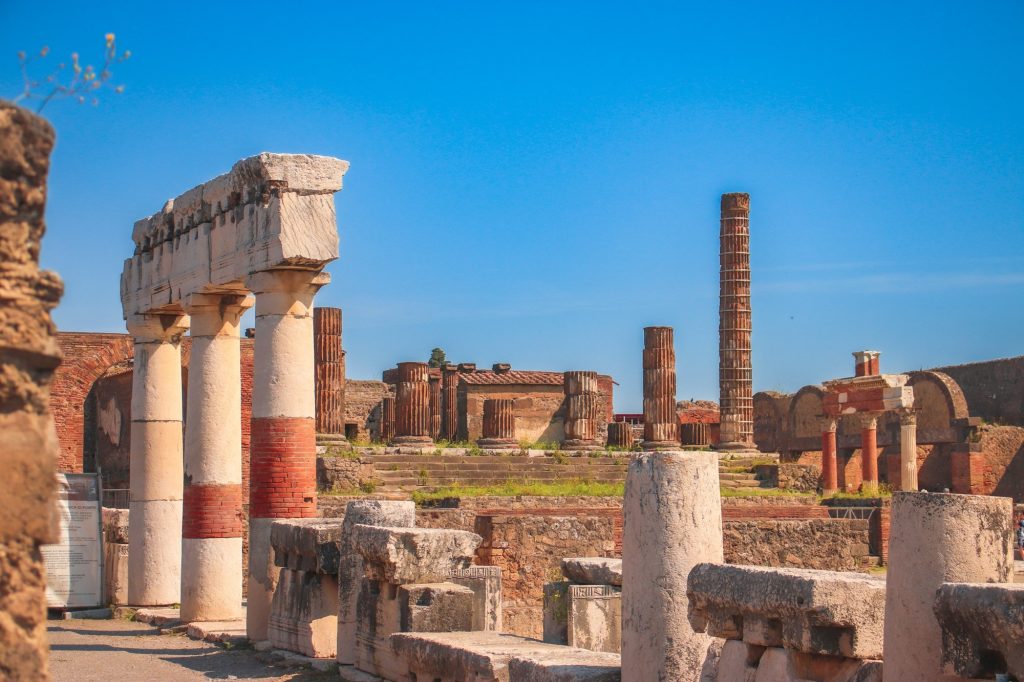
The Forum was the heart of the city. This enormous open square was surrounded by temples, government buildings, and markets where citizens gathered each day. Looking across the Forum toward Mount Vesuvius is one of Pompeii’s most iconic views.
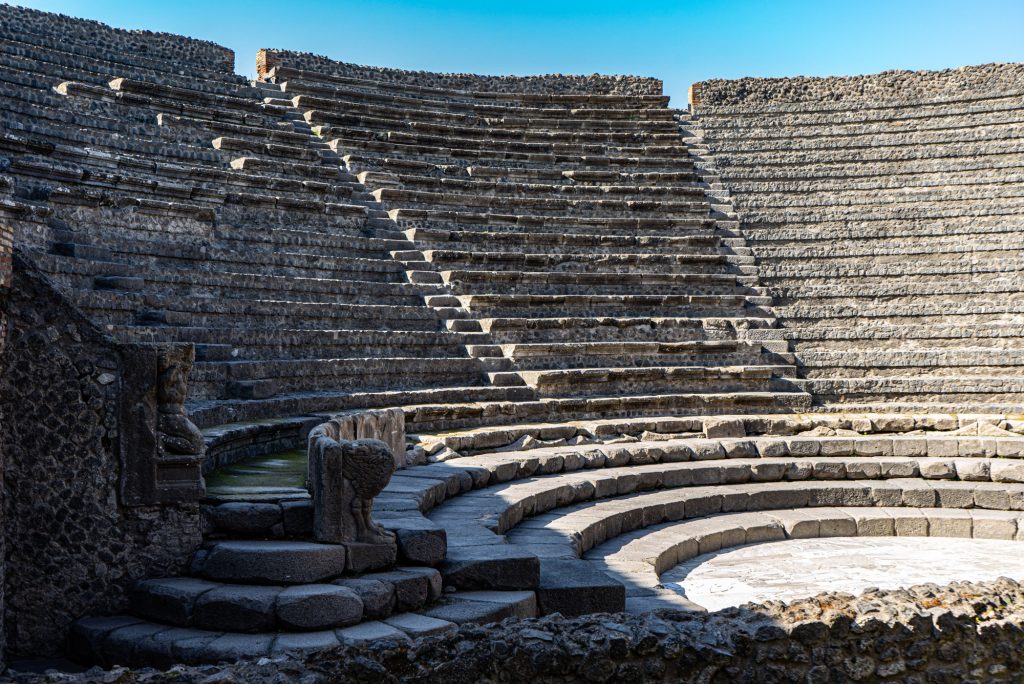
The Amphitheater is another highlight. Built around 70 BC, it’s the oldest surviving Roman amphitheater in the world and could hold around 20,000 spectators for gladiator games and public events.
The House of the Faun offers a glimpse into the lives of Pompeii’s wealthiest residents. Its impressive courtyards, artwork, and size reveal just how prosperous parts of the city once were.
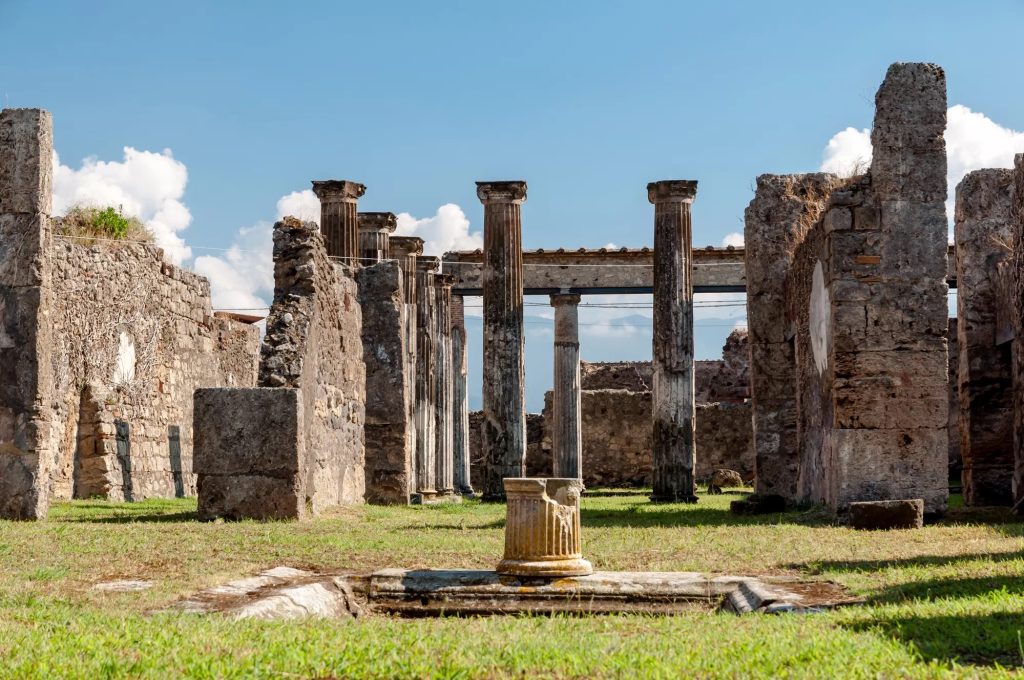
Just outside the city walls, the Villa of the Mysteries contains some of the finest preserved Roman frescoes ever discovered. Their vivid colors remain remarkably vibrant after nearly two thousand years.
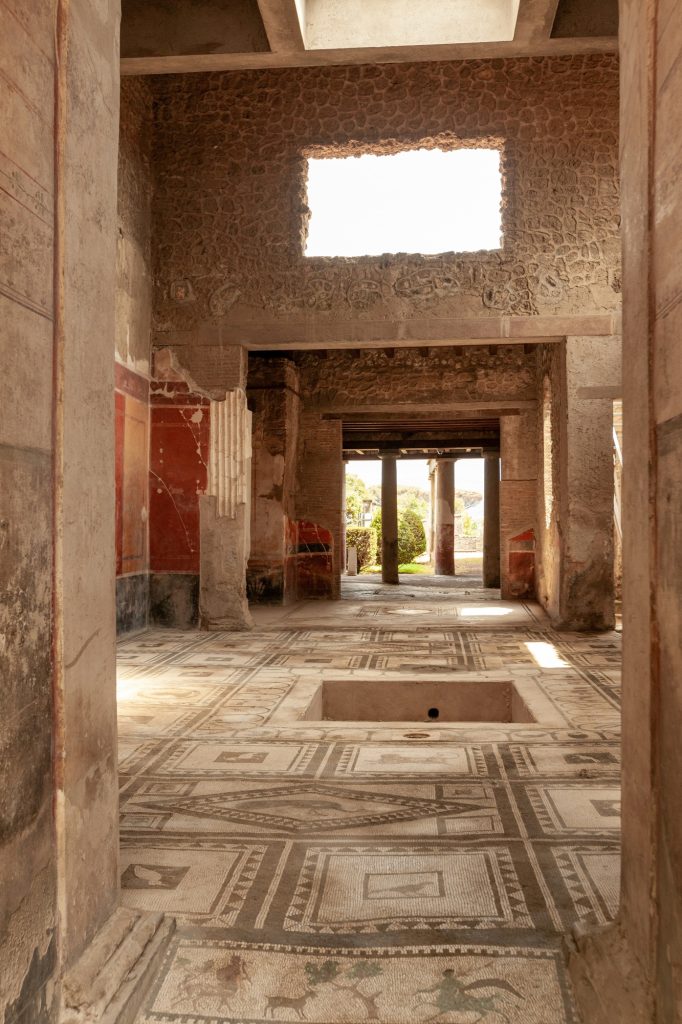
The Stabian Baths showcase the incredible engineering skills of the Romans. Visitors moved through warm, hot, and cold bathing rooms while using one of the most advanced public bath systems of the ancient world.
Even if history isn’t normally your thing, it’s hard not to appreciate how advanced this civilization really was.
The Moments That Stay With You
For me, the most powerful part of Pompeii wasn’t the architecture.
It was the people.
Throughout the site you’ll find plaster casts created from the spaces left behind by victims of the eruption. Archaeologists discovered that as bodies decomposed inside the hardened ash, they left hollow cavities. By carefully filling those spaces with plaster, they preserved the victims’ final positions.
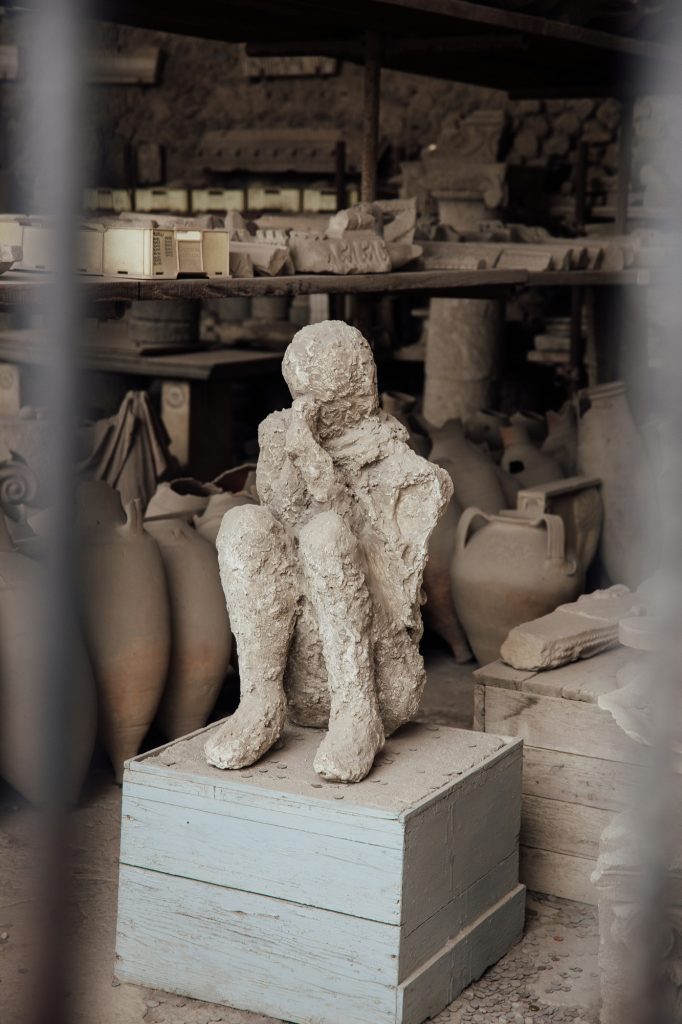
Some appear to be protecting loved ones.
Others cover their faces.
One dog is still shown pulling against its chain.
It’s difficult to stand in front of these casts without imagining the fear and uncertainty they experienced.
They’re a reminder that Pompeii wasn’t simply an ancient city.
It was home.
Look for the Small Details
Some of Pompeii’s most fascinating discoveries aren’t the famous landmarks.
Notice the raised stepping stones crossing many of the streets. They allowed pedestrians to cross above wastewater while wagons continued passing between them.
Look closely at the colorful frescoes that still decorate many homes.
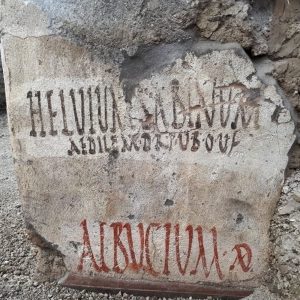
Watch for election advertisements painted directly onto walls.
You’ll even find ancient fast-food restaurants called thermopolia, where hot meals were served from large clay jars built directly into stone counters.
It’s amazing how many parts of modern life already existed two thousand years ago.
The more you slow down, the more Pompeii reveals itself.
When to Visit
Pompeii is one of Italy’s most visited attractions, and it can become extremely busy.
Arriving shortly after opening is the best way to avoid crowds and summer heat. The early morning light is also beautiful for photography.
Late afternoon can also be a good choice once many of the large tour groups have departed.
Spring and fall generally offer the most comfortable temperatures, although Pompeii is impressive year-round.
Pair It With Mount Vesuvius
If your schedule allows, combine Pompeii with a visit to Mount Vesuvius.
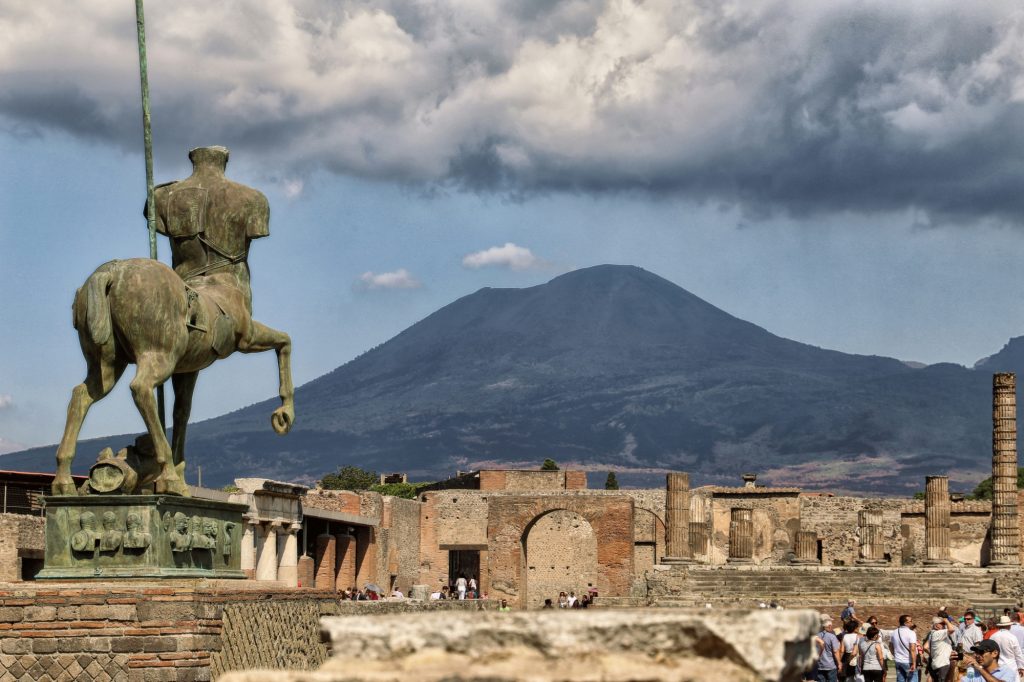
It’s one thing to read about the eruption.
It’s another to stand on the rim of the volcano responsible for preserving this incredible city.
The hike to the crater is relatively short, and the panoramic views across the Bay of Naples are spectacular.
After spending hours walking through Pompeii, seeing Vesuvius towering above the landscape puts everything into perspective.
Getting There
Pompeii is incredibly easy to reach.
From Naples, trains take about 40 minutes.
From Sorrento, the journey is roughly 30 minutes.
Many travelers also visit from the Amalfi Coast, although travel times are longer and often involve a combination of ferry, bus, or train.
Buying tickets in advance is a good idea during the busiest months, especially if you’re planning to join a guided tour.
A Place You’ll Think About Long After You Leave
Pompeii isn’t memorable because it’s old.
It’s memorable because it reminds you that history was once someone’s ordinary day.
As you walk its streets, you begin to picture the people who lived here. Families gathering for dinner, merchants opening their shops, children running through the neighborhood, and friends meeting at the public baths. Then, in a matter of hours, everything changed.
That’s what makes Pompeii different from almost every other historic site I’ve visited. You’re not simply looking at ruins. You’re walking through a city that still tells the story of the people who called it home.
Take your time here. Slow down, notice the details, and if you can, explore with someone who knows the stories behind what you’re seeing. Those stories are what transform Pompeii from an impressive archaeological site into one of the most unforgettable places in Italy.